17/2026-03
Coinbase Plans to Launch Integrated Exchange for Crypto Assets, Stocks, and Commodities in 2026
Coinbase CEO Brian Armstrong announced that the exchange will implement an "all-in-one exchange" strategy in 2026, integrating crypto assets, stocks, prediction markets, and commodity trading, covering spot, futures, and options products.
This plan will position Coinbase in direct competition with traditional brokerages while expanding its core business from digital assets to the fields of security tokenization and event-driven prediction markets, which have recently reached trading volumes in the billions of dollars.
In a post on X platform, Armstrong outlined three strategic priorities:
Building a global "all-in-one exchange" ecosystem
Expanding the stablecoin payment system
Driving user on-chain through Coinbase developer tools, Base blockchain, and consumer applications
"Our goal is to make Coinbase the world's leading financial application," he emphasized, stating that the company is increasing investment in product quality and automated systems to support this strategic expansion.
Prediction Markets and Security Tokenization Become Strategic Core
Coinbase made a strong entry into the prediction market space in late 2025, partnering with Kalshi, a compliant platform regulated by the U.S. Commodity Futures Trading Commission (CFTC). Interface screenshots leaked in November of the same year showed that Coinbase had developed a branded prediction platform supporting USDC or USD trading, covering multiple dimensions including economics, politics, sports, and technology.
The product operates through Coinbase's derivatives business division, Coinbase Financial Markets, leveraging Kalshi's regulatory framework to provide event contract products structured as "yes/no" binary choices.
In addition to prediction markets, Coinbase plans to independently issue security tokenization products rather than relying on external partners. This move differentiates it from competitors like Robinhood and Kraken, which still provide stock token services through third-party suppliers in certain jurisdictions.
According to data from rwa.xyz, the monthly transfer volume of security tokenization products has grown by approximately 76% in the past 30 days, reaching $2.46 billion, reflecting that platforms are accelerating experiments to bring traditional assets on-chain.
This trend highly aligns with Coinbase's strategic ambition to create a digital asset "all-in-one application"—aiming to allow users to trade crypto assets, tokenized securities, and event-driven prediction markets on a single platform.
Prediction markets have experienced explosive growth in the past year, with traditional exchanges and native crypto institutions all making moves, viewing them as new paths for information monetization and order flow monetization:
Gemini recently received CFTC approval to launch the prediction platform Gemini Titan for U.S. users
Crypto.com reached agreements with partners including Trump Media & Technology Group to jointly build a prediction market ecosystem
Robinhood and trading firm Susquehanna agreed to acquire a 90% stake in the regulated platform LedgerX, deeply involving themselves in the crypto prediction market space
Regulatory Tailwinds and Institutional Momentum Accelerate
As regulatory transparency increases and institutional participation deepens, Coinbase executives believe the industry will face a more favorable development environment.
David Duong, Head of Research at the exchange, pointed out in a year-end outlook that 2025 has become a turning point for digital assets—regulated spot ETFs have opened doors to a broader range of investors, and stablecoins have become more deeply integrated into traditional financial workflows.
"We expect these momentum factors to create a compounding effect in 2026: shortened ETF approval cycles, stablecoins playing a more central role in delivery-versus-payment structures, and tokenized collateral gaining wider acceptance in traditional trading," Duong wrote in the report.
Armstrong emphasized the shift in regulatory winds during a February earnings call, telling investors: "The significance of the changes that have occurred in the past few months cannot be overstated."
He noted that the change in the U.S. attitude toward crypto assets is driving global markets to follow suit, and Coinbase is benefiting from this through its international expansion strategy.
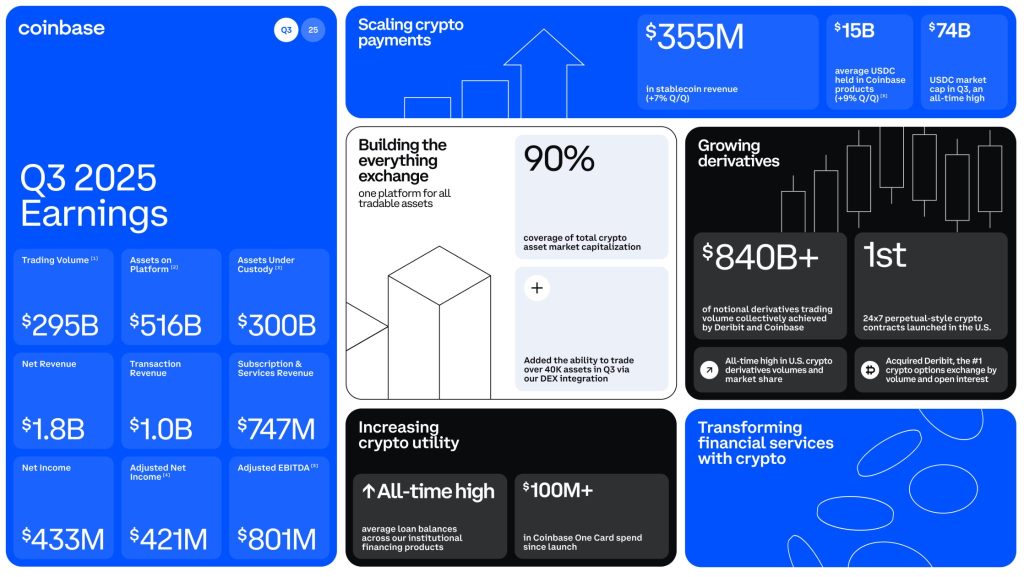
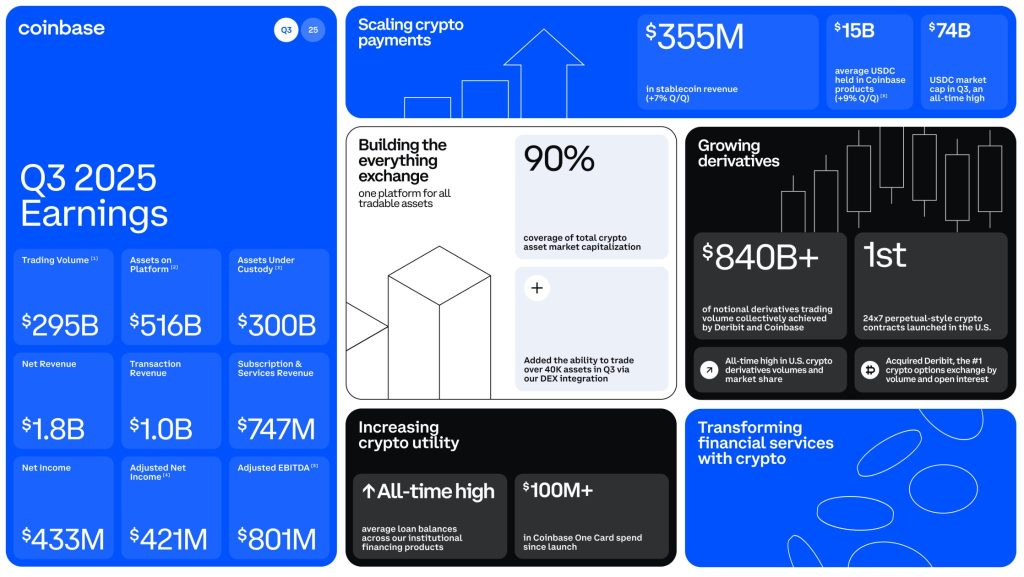
According to the company's third-quarter shareholder letter, the exchange's assets under management have reached $516 billion, equivalent to 16% of the total cryptocurrency market capitalization.
Armstrong predicts that by the end of this decade, 10% of global GDP will run through crypto financial infrastructure, comparing this transformation to how companies adapted to the internet wave in the early 2000s.
"This is somewhat like the early 2000s, when every company needed to explore how to adapt to the internet," he said during the conference call.
Regarding stablecoin policy, Coinbase Chief Policy Officer Faryar Shirzad recently warned that restrictions on stablecoin yields could weaken the U.S. position in digital payments—China has announced that starting January 1, 2026, it will allow commercial banks to pay interest on digital yuan wallets.
The People's Bank of China previously announced a framework to push central bank digital currency beyond cash replacement functions, an announcement that led Chinese investors to inject over $188 million into digital yuan-related stocks.
This plan will position Coinbase in direct competition with traditional brokerages while expanding its core business from digital assets to the fields of security tokenization and event-driven prediction markets, which have recently reached trading volumes in the billions of dollars.
In a post on X platform, Armstrong outlined three strategic priorities:
Building a global "all-in-one exchange" ecosystem
Expanding the stablecoin payment system
Driving user on-chain through Coinbase developer tools, Base blockchain, and consumer applications
"Our goal is to make Coinbase the world's leading financial application," he emphasized, stating that the company is increasing investment in product quality and automated systems to support this strategic expansion.
Prediction Markets and Security Tokenization Become Strategic Core
Coinbase made a strong entry into the prediction market space in late 2025, partnering with Kalshi, a compliant platform regulated by the U.S. Commodity Futures Trading Commission (CFTC). Interface screenshots leaked in November of the same year showed that Coinbase had developed a branded prediction platform supporting USDC or USD trading, covering multiple dimensions including economics, politics, sports, and technology.
The product operates through Coinbase's derivatives business division, Coinbase Financial Markets, leveraging Kalshi's regulatory framework to provide event contract products structured as "yes/no" binary choices.
In addition to prediction markets, Coinbase plans to independently issue security tokenization products rather than relying on external partners. This move differentiates it from competitors like Robinhood and Kraken, which still provide stock token services through third-party suppliers in certain jurisdictions.
According to data from rwa.xyz, the monthly transfer volume of security tokenization products has grown by approximately 76% in the past 30 days, reaching $2.46 billion, reflecting that platforms are accelerating experiments to bring traditional assets on-chain.
This trend highly aligns with Coinbase's strategic ambition to create a digital asset "all-in-one application"—aiming to allow users to trade crypto assets, tokenized securities, and event-driven prediction markets on a single platform.
Prediction markets have experienced explosive growth in the past year, with traditional exchanges and native crypto institutions all making moves, viewing them as new paths for information monetization and order flow monetization:
Gemini recently received CFTC approval to launch the prediction platform Gemini Titan for U.S. users
Crypto.com reached agreements with partners including Trump Media & Technology Group to jointly build a prediction market ecosystem
Robinhood and trading firm Susquehanna agreed to acquire a 90% stake in the regulated platform LedgerX, deeply involving themselves in the crypto prediction market space
Regulatory Tailwinds and Institutional Momentum Accelerate
As regulatory transparency increases and institutional participation deepens, Coinbase executives believe the industry will face a more favorable development environment.
David Duong, Head of Research at the exchange, pointed out in a year-end outlook that 2025 has become a turning point for digital assets—regulated spot ETFs have opened doors to a broader range of investors, and stablecoins have become more deeply integrated into traditional financial workflows.
"We expect these momentum factors to create a compounding effect in 2026: shortened ETF approval cycles, stablecoins playing a more central role in delivery-versus-payment structures, and tokenized collateral gaining wider acceptance in traditional trading," Duong wrote in the report.
Armstrong emphasized the shift in regulatory winds during a February earnings call, telling investors: "The significance of the changes that have occurred in the past few months cannot be overstated."
He noted that the change in the U.S. attitude toward crypto assets is driving global markets to follow suit, and Coinbase is benefiting from this through its international expansion strategy.
According to the company's third-quarter shareholder letter, the exchange's assets under management have reached $516 billion, equivalent to 16% of the total cryptocurrency market capitalization.
Armstrong predicts that by the end of this decade, 10% of global GDP will run through crypto financial infrastructure, comparing this transformation to how companies adapted to the internet wave in the early 2000s.
"This is somewhat like the early 2000s, when every company needed to explore how to adapt to the internet," he said during the conference call.
Regarding stablecoin policy, Coinbase Chief Policy Officer Faryar Shirzad recently warned that restrictions on stablecoin yields could weaken the U.S. position in digital payments—China has announced that starting January 1, 2026, it will allow commercial banks to pay interest on digital yuan wallets.
The People's Bank of China previously announced a framework to push central bank digital currency beyond cash replacement functions, an announcement that led Chinese investors to inject over $188 million into digital yuan-related stocks.